
Our experience with eBook distributors
How come we relied on eBook distributors?
In 2012, when my father Ricardo Tronconi came up with the idea of founding an eBook series, I wasn’t sure we could make it. The obstacles were many, and we had no knowledge of that world. It took us two years to set up an ecosystem that could keep up with the market and allow us to be distributed everywhere.
Now I’ve been working for La Novella Orchidea for seven years and I can say that I’ve had a lot of experiences on what an author and a reader can find on the internet. Experiences that, unfortunately, are not very often positive. Of course, the self-publishing market, although full of challenges, is quite varied.
I will only talk about the main portals, the ones we all know more or less, which, for better or worse, allow an aspiring self-publisher to distribute their writings with minimal effort and maximum results, while keeping their intellectual property and the possibility of publishing with other online stores.
LULU
Lulu was the founder of self-publishing and recently changed its entire graphical interface, making it more user-friendly on the one hand, and less “permissive” on the other. To publish an eBook, you now need to specify the language, but the list is not complete (for example, Chinese is missing). In addition, the upload format has always had problems accepting ePub, detecting non-existent errors (or errors not found by other stores).
The problem is less significant since, to publish through its mainly US distribution network, Lulu does not allow the sale of a product that does not have at least 50% of its content in English. Furthermore, even so, it requires a one-time payment (for now) of $ 4.99. The only solution for other languages (those available) is to upload a free PDF, which is now obsolete and almost never used, exclusively on its online store.
Now it’s more of a habit to upload content to your Lulu user account, mostly because it’s free, but the return, unless you’re E.L. James (and we’re not), is zero.
AMAZON
Self-publishing authors often prefer this channel. It is one of the most famous and allows you to enter the Kindle Unlimited program (after granting the exclusive for ninety days).
We have always published on Amazon through third parties, namely through StreetLib. However, attracted by the world it seemed to offer, in 2018 we brought all our publications directly to Amazon (keeping StreetLib for distribution on other stores). The process of being accepted into the KDP (Kindle Direct Publishing) program is rather long and articulated. Not all sections are translated or available for Italy, but it’s worth the effort. The final profile is rich in publishing tools, and the distribution format itself is, in my opinion, the best on the market.
On the other hand, as a private company, Amazon is very strict about the content published, especially when it comes to digital illustrations or comics. Any kind of graphic that depicts eroticism (e.g. a breast) or violence (e.g. a bloodstain) is immediately blocked from distribution. The real problem lies in understanding the criteria used by the internal algorithm to select these contents.
Suppose you want to publish two identical comics in two different languages. It’s not guaranteed that both will pass or both will be blocked. Sometimes there are disparities in control depending on the language of publication (the algorithm is stricter with English), the color (black and white has a higher chance of being accepted), and so on. The same applies to print, textual eBooks, and third-party distributors (where there is almost no control).
After some unexpected blocks, Amazon sometimes expels the author from the KDP program. Without providing any explanation on what content triggered it. Without the possibility of further appeal or access to the account to retrieve useful documentation.
How can you fix it if it happens? Roll up your sleeves and blatantly republish everything through a third-party distributor. All eBooks will reappear in less than 24 hours, and if access to Amazon’s facilitations is permanently denied, at least you will ensure a presence on the world’s largest internet company.
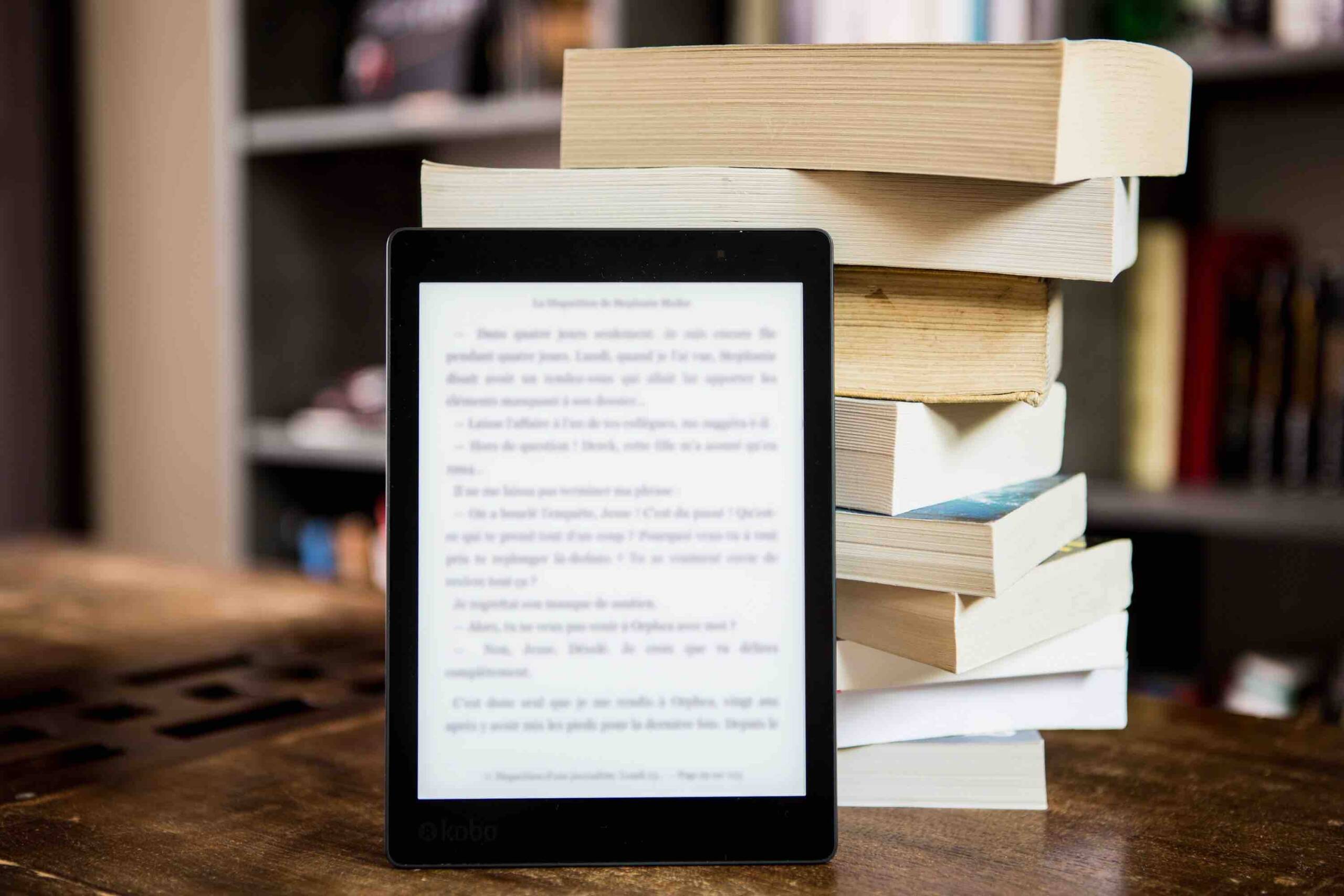
KOBO
The situation with Kobo is essentially the same as Amazon’s, but with a completely different outcome.
Kobo also has a good upload format and allows its authors to join Kobo Plus (currently limited to a few European countries) and the OverDrive library. Like other online stores, Kobo also adopts rather strict policies on content, especially erotic ones. But it does so in its own way.
When selecting categories, any reference to “adult themes” is removed, at least for comics and graphic novels. In truth, it accepts practically everything from third-party distributors (in fact, it has an “erotic” section in its sales store), but it doesn’t tempt you if the publication goes directly through its upload format.
However, if it deems a content inappropriate after the checks, it’s no big deal. The incriminated eBook is simply removed from the store, while the user account is free to continue with other publications. This is obviously good for the author, but in my opinion, Kobo’s internal product categorization policy limits the indexing of the same. Selling on the Kobo store through third-party distributors, in fact, yields much more in terms of numbers, even if it’s less economically beneficial.
STREETLIB
Now a true giant of digital publishing, StreetLib immediately positioned itself in the market as one of the most important third-party distributors in Italy.
The service, which is (almost) entirely free, unlike other similar services (e.g. Youcanprint), provides various useful tools for authors. One of these is Write, which allows authors to write a book and export it directly in the desired format without conversion costs. Recently, the memory space offered on Write for each author has been limited depending on the version (free or monthly payment based on the desired MB). There have also been several new developments (not all positive) regarding export formats, especially PDF, which now requires the “virtual” creation of a paper version.
But the latest real innovation from StreetLib has been the introduction of a section dedicated to self-produced audiobooks, although the number of participating stores is still very limited. That said, StreetLib’s main strength remains its global distribution, which allows all types of sales, rentals, and subscriptions of products, even where others do not reach or where it is difficult for a non-US user (such as Apple or Google) to access.
Although everything seems to work perfectly on paper, unfortunately, StreetLib’s “human” management does not live up to expectations. Customer care always provides rather evasive responses regarding errors that can be found on the site, referring to FAQs or blog articles that are often incorrect or not updated.
In addition, they are not as punctual as other stores with payments, which must be solicited every time (not always successfully). Aside from the fact that their upload format only works on weekdays (and not even that well), the real problem is with invoicing. It is not always correct or reflective of the data provided in other documents. For those like us who have many publications, it can be quite convoluted, not to mention the reference period, which is often more than a month late compared to the canonical quarter.
Unacceptable? Predictable: the larger the service, the less control one has over it.
CONCLUSIONS
In conclusion, with a bit of patience and many hours of experience in the field, good results can be achieved, and (almost) all obstacles can be overcome. However, those who expect the world of self-publishing to be a bargain basement choice, a bit of luck and second-hand goods, may be in for some surprises. Like any other field, it involves a long series of responsibilities and sacrifices. Providing the final reader with a quality product is the first and last goal when deciding to enter this bizarre world.
Related articles


