It’s not Christmas: it’s Free Will
These days there is nothing but talk about COVID-19, but some of us have not yet forgotten that today is Christmas. Christmas is not only a commercially well known holiday, it is, at least for Christian culture, the symbolic date of Christ’s birth. The son of God, the Agnus Dei in whom God himself was somehow ‘incarnated’, sacrificing himself to save humanity from original sin.
Free Will
Regardless of matters of belief, for Europeans – and especially for us Italians – it is virtually impossible to separate existence from a culture so deeply influenced by the Christian and Catholic religion. However, it is precisely because of it that we constantly question ourselves on another concept: free will. Even assuming the existence of an omnipotent and omniscient God, free will dictates that man is not a sad puppet of Him. Within each person, according to this assumption, there is therefore a free choice between good and evil, which the deity allows without conditioning man with his superior will.
The question, while theologically interesting and very broad, can be seen in much more basic ethical and scientific terms. If free will did not exist, and we were therefore led through the years by God, Fate or simply Nature, everything we would do would be at best… useless. For those who believe, there would be no difference in doing good or evil, because the outcome would be identical. For those who do not believe, what would be the point of striving to live a morally correct life, since our choices would already be predetermined? Simply put, without free will, not only would we be empty shells, but our entire society would not stand.
Philosophical illusionism…
The Post, in an article a few years ago, questioned this question at length, describing this reasoning as a form of philosophical ‘illusionism’. According to scholars such as Saul Smilansky, a professor of philosophy at the University of Haifa, Israel, man still needs to believe in the existence of free will, whether it is real or not. Indeed, the idea of not having the possibility of self-determination would automatically nullify any individual merit, create the preconditions for a tendency towards de-responsibility, and end up erasing the very foundations of institutions and society.
… or Free Will determinism?
On the other hand, it is also true that if we only refer to ‘evil’ behaviour, the question of free will becomes rather uncomfortable. For why should an individual endowed with self-determination do evil? Would it not be better to believe in a purely determinist view, for which everything in nature happens according to necessity? In this case, a cause-and-effect relationship determined, for example, by genetics, could easily explain why criminals behave as they do, helping society to prevent their behaviour. If the plot of Minority Report is now buzzing in someone’s head, good, because that’s exactly where I wanted to go.
Determinism, while fascinating in its quest for the ‘perfect mechanistic society’, carries within it the risk of an inevitably fatalistic drift. It is very easy, in fact, to slip from a strictly scientific view of the concept to an attitude of absolute passivity towards the events around us. In a nutshell, for anthropologists and sociologists, determinism is lickety-split, but for the individual who has to live a normal life, it is not so exciting to know that his or her genes might lead him or her to perform certain actions. And this is where the plot of Gattaca comes in, and we return to the concept of philosophical ‘illusionism’.
The concept in our collection
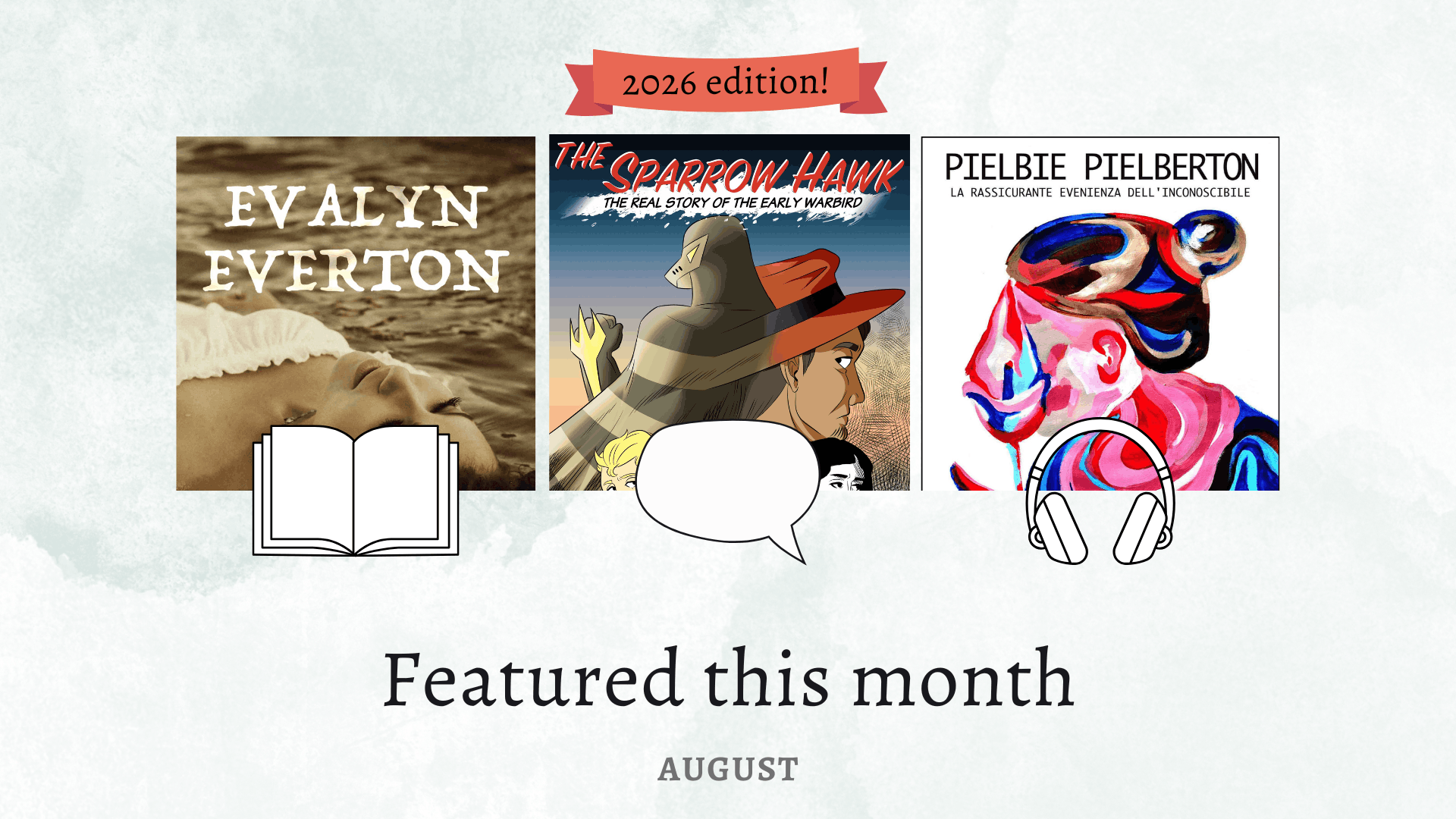
For those who are about to read Ricardo Tronconi’s novels during this Christmas season, it is good to know that the theme of free will can be found frequently and in various forms. There is free will in following the tempter devil or in choosing redemption (The soul quantum theory and other novels); in rebelling for a life outside the box (Evalyn Everton); in doing evil (The weight of air and its consequences). And finally there is free will as a concept pure and simple.
In “I racconti di Padre Pelagio e della Madre Badessa”, the last novella is clearly an homage to John Steinbeck’s The Valley of Eden. In a very famous passage, the American author writes:
“The American translation of the Bible commands men to triumph over sin, and sin can be called ignorance. The King James translation makes a promise with that ‘thou shalt have’, meaning that men will surely triumph over sin. But the Hebrew word timshel – “thou shalt” – implies a choice. It may be the most important word in the world. It means that the way is open. It puts everything back to man. For if you can, it is also true that you can not.”
Happy Free Will
St Augustine, a few centuries earlier, had tried to settle the matter by bringing in a third player: Divine Providence. Man, in fact, by distancing himself from God with the very first act of free will – original sin – would have lost his absolute freedom to implement it. Not to believe in it, not to want it. Only to put it into practice. After the expulsion from Eden, man would have had an inclination towards good. But without being able to choose it, except with the help of Grace.
And so, if we reinterpret these two thoughts in a modern key, what can the birth of the Lamb of God symbolise? Deliverance from original sin, certainly, but also… man’s regaining of free will. The greatest gift a God can give the creatures he loves: granting them the freedom to choose. To be able to do and also not to do.
Therefore, I do not wish you Merry Christmas today… but Happy Free Will.